Editor's Corner - April 2024
Although you will not be reading this until April, or even May, as I write it is not yet March. While I try to keep on top of the many, many releases that have come in for consideration since our last issue, I am also having to consider a number of discs that we overlooked in the past year. While we will not know the results of the Juno Awards before we go to press, the nominations have been recently announced and although we have covered most of discs in the categories most relevant to The WholeNote, there are a few we overlooked. You’ll find a couple of these – Caity Gyorgy/Marc Limacher and Nick Maclean Quartet featuring Brownman Ali – in our Jazz and Improvised section, and two from the Classical Album of the Year (soloist) category right here.
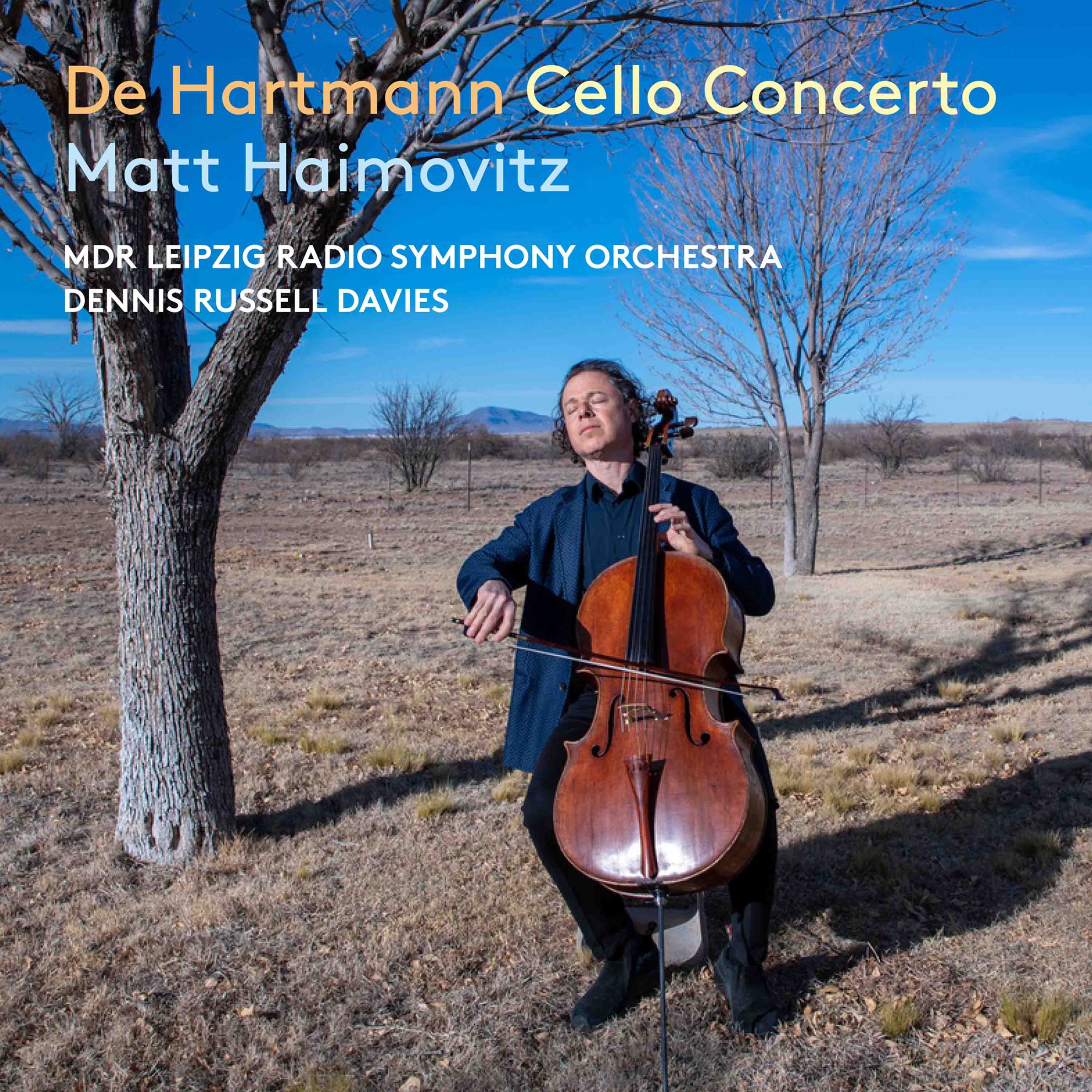 Matt Haimowitz is the soloist in the digital-only release Thomas de Hartmann – Cello Concerto Op.57 (Pentatone PTC 5187159 pentatonemusic.com/product/de-hartmann-cello-concerto). Dennis Russell Davies conducts the MDR Leipzig RSO in the first commercial recording of this work by one of the significant Ukrainian composers of the first half of the 20th century. De Hartmann (1885-1956) was an important compositional voice during his lifetime, but since then his colourful and compelling music has been largely ignored. This recording is part of a larger undertaking aimed to remedy that situation, and Haimowitz’s stunning performance bodes well for the success of the venture (thomasdehartmannproject.com). The concerto, which reflects the anxiety of the times, was composed in 1935 and first performed three years later by Paul Tortelier and the Boston Symphony under Serge Koussevitzky. Although not himself a Jew, de Hartmann was troubled by the acute antisemitism of the rising Nazi regime in Germany and the work incorporates Jewish musical folklore and other Eastern European folk traditions. Indeed the playful third movement, with its moto-perpetuo cello line, opens with a (presumably Hungarian) theme that Bartók would use in sketches for a viola concerto a decade later. The at times cinematic, 36-minute concerto is an excellent introduction to this often-overlooked composer, and with the current horrific situation in Ukraine its rediscovery is a timely reminder of the glorious musical heritage of that nation.
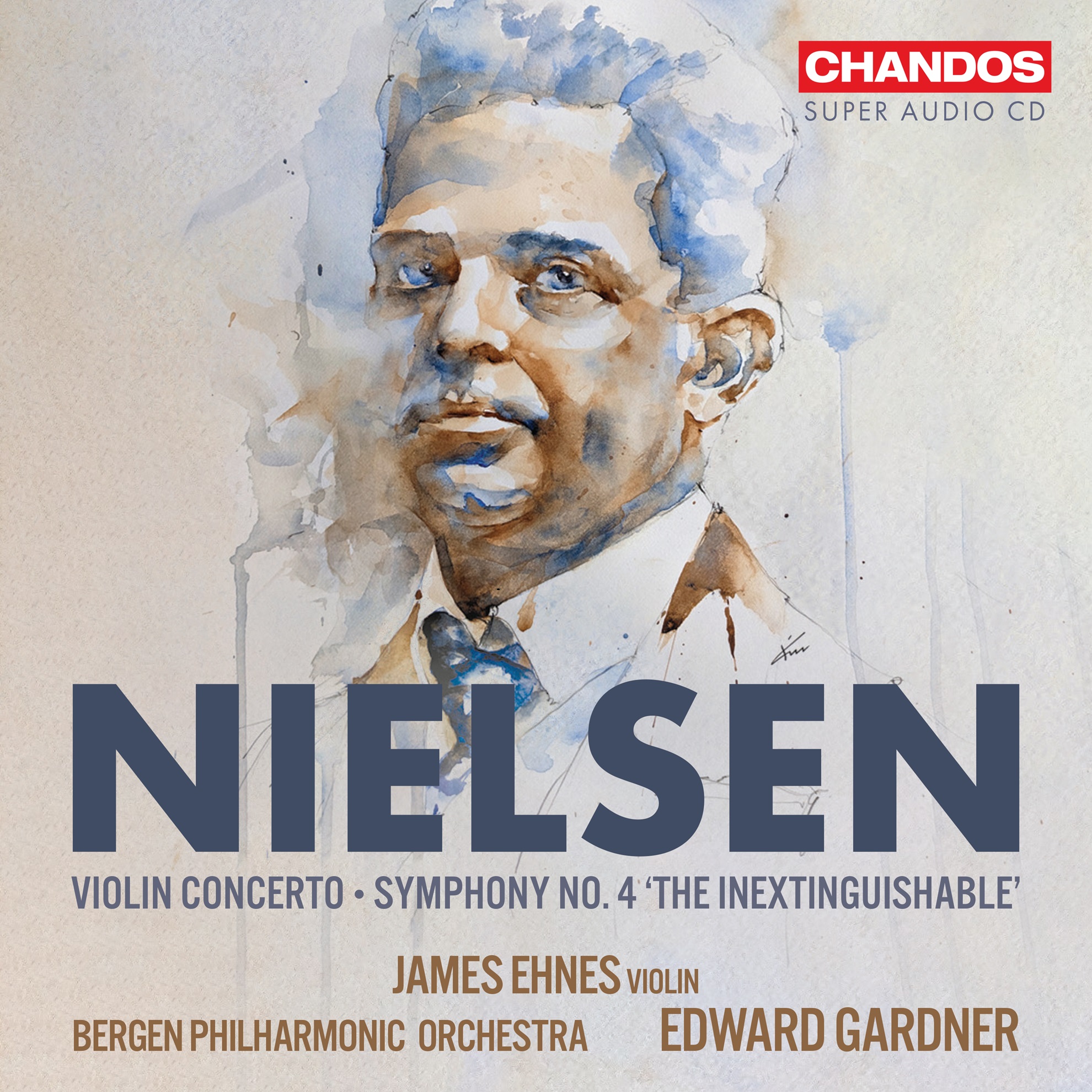 James Ehnes is the soloist for Carl Nielsen – Violin Concerto with the Bergen Philharmonic under Edward Gardner (Chandos CHSA 5311 chandos.net/products/catalogue/CHSA%205311). An extended slow introduction – likened by Paul Griffiths in the excellent booklet notes to a folk fiddler playing with “classical elegance,” gently fades away before an abrupt orchestral explosion into the Allegro cavallerésco, a “chivalric” episode evoking knights on horseback. The Poco Adagio begins gently with winds before morphing into a contemplative violin solo. The final movement is also gentle but quite mischievous where, in Griffiths’ words “comedy is overplayed […] making riot of its ebullience. [But] the cadenza goes another way, back to a moment of drone-accompanied melody, as if this had all been the dream of a wandering fiddler.” Nielsen began the work in Norway and Norwegian violinist Vilde Frang has said “I think every violinist should play this concerto, because you get challenged not only technically, but also structure-wise. You have to take a bird’s eye view of this concerto, you need this kind of perspective.” Ehnes seems to have had no problem attaining this vantage point. He rises to all the challenges and there are passages that shine like jewels. It’s easy to see why this performance was short-listed for a Juno.
Gardner also leads the orchestra in a magnificent performance of Nielsen’s Symphony No.4 “The Inextinguishable” recreating the same pairing of works that Nielsen conducted in a program in London in 1923, 100 years before this recording was made.
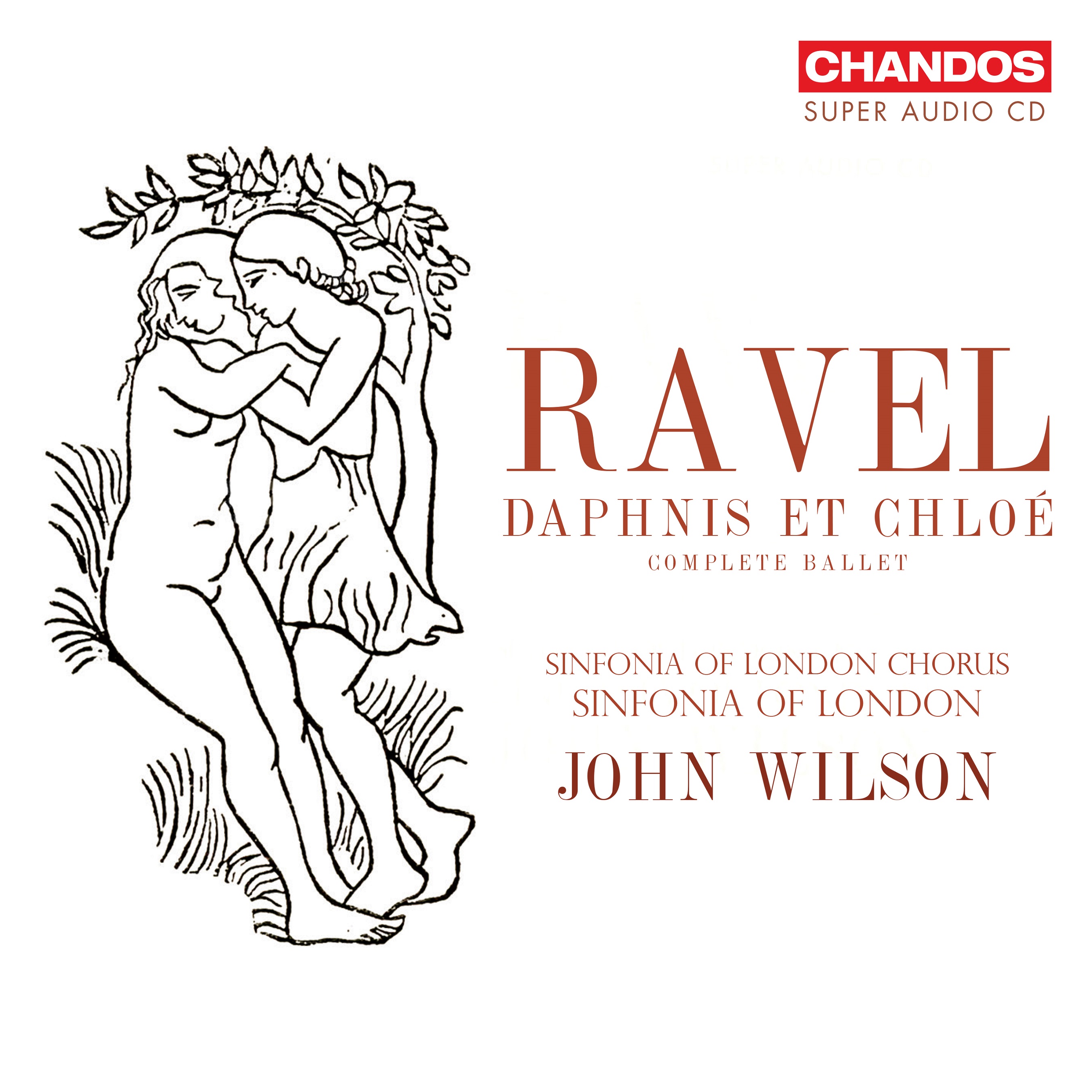 Another one that slipped through the cracks last year is a fabulous new recording of Ravel – Daphnis et Chloé complete ballet (Chandos CHSA 5327 chandos.net/products/catalogue/CHAN 5327) featuring the Sinfonia of London Chorus and Sinfonia of London. Director John Wilson used the COVID-19 lockdown period to prepare a new performing edition of the ballet that we are more familiar with from the two suites that the composer extracted from the near-hourlong original. It was conceived in 1909, the year Serge Diaghilev brought his Ballet Russe to Paris, as a collaboration between Ravel, Diaghilev and dancer/choreographer Michel Folkine. Although there were myriad complications and disagreements along the way, the project was eventually brought to fruition culminating in, much to Ravel’s chagrin, only two performances at the end of the 1912 season. Although Diaghilev did mount three more performances at the end of the following year, he never thereafter presented it in Paris. This new recording is accompanied by extensive notes by Wilson detailing the history of the ballet’s creation and his own challenges in recreating what he feels is an authentic version of the historic ballet. There is also a detailed libretto/mis en scene by Folkine, making a very impressive booklet in three languages totaling 42 pages. The performance is stunning and the recording itself is immaculate, with a dynamic range that has to be heard to be believed.
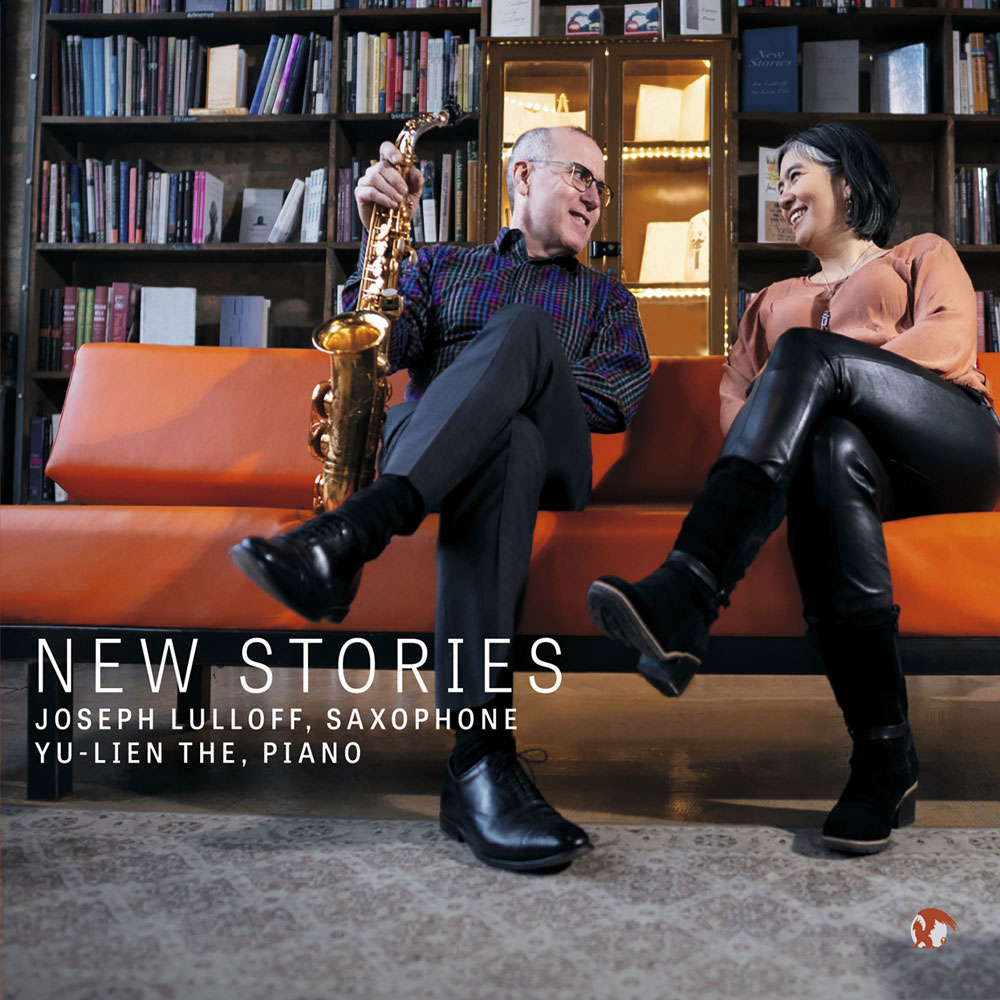 One more disc lost in the shuffle before we move on. New Stories features saxophonist Joseph Lulloff and pianist Yu-Lien The performing works by colleagues from Michigan State University, Canadian Dorothy Chang and Americans David Biedenbender, Stacy Garrop and Carter Pann (Blue Griffin Records BGR607 bluegriffin.com). Chang’s lyrical title work is the earliest on the disc, dating from 2013. The composer says the commission “was the perfect opportunity to explore the combination of Eastern and Western influences in my music, a composition puzzle I was grappling with at the time.” Biedenbender’s one-movement Detroit Steel is an unaccompanied work intended to honour “the grit, strength and resolve of the people of the city.” Garrop’s Wrath is a follow up to her earlier Tantrum for alto sax and piano, and its three movement titles – Menace, Shock and Amok – aptly describe the moods of the piece. At 25 minutes, Pann’s Sonata for Alto Saxophone and Piano is the most extended and developed work on the disc, comprising six tracks of varied aspect from the opening This Black Cat to the closing Lacrimosa in memory of Joel Hastings. Throughout the disc Lulloff and The rise to every challenge and nuance pitched by the four composers, from languid and emotive melodies to brash, abrasive and sometimes jocular outbursts.
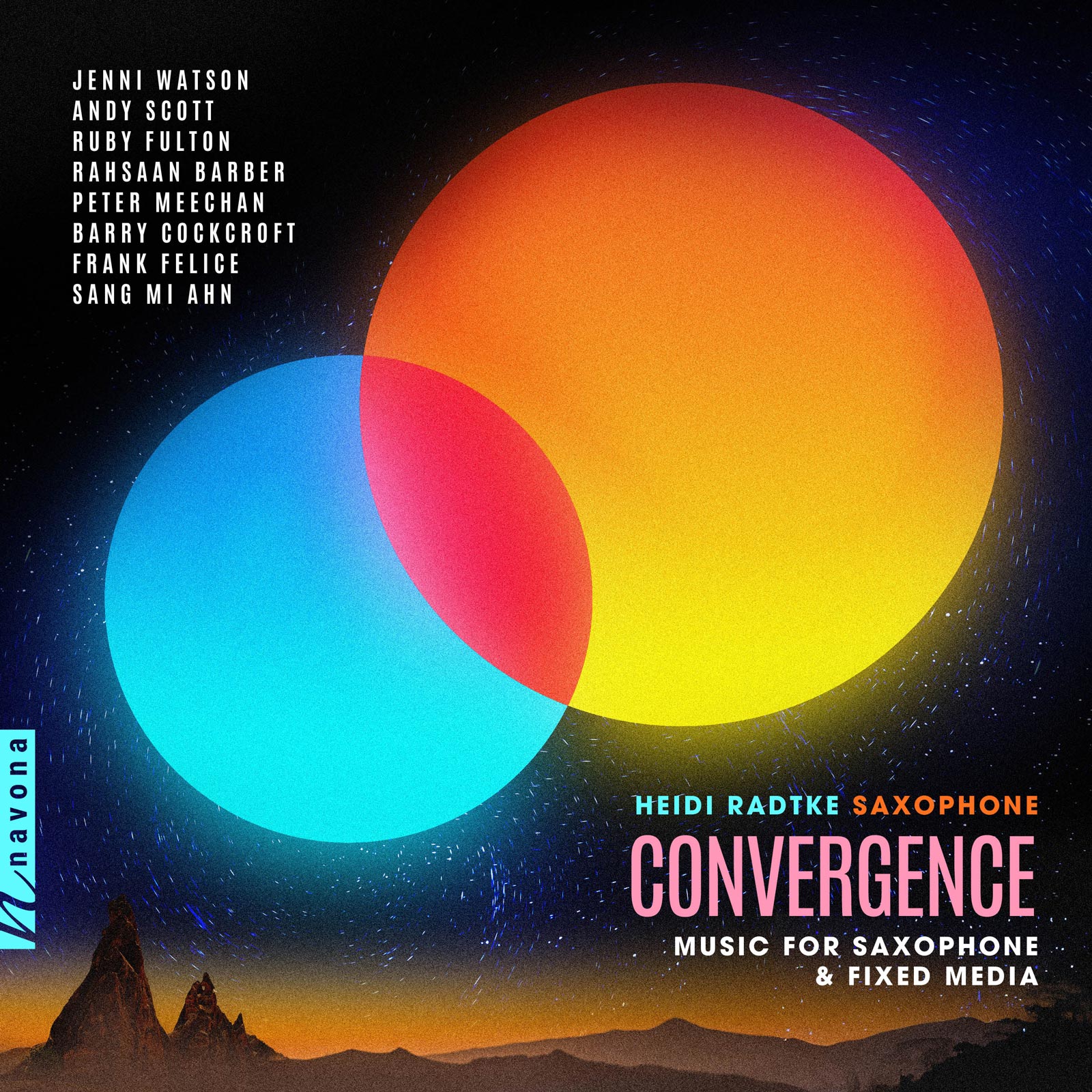 And on to more recent arrivals… Another saxophone disc CONVERGENCE – Music for Saxophone and Mixed Media (Navona Records nv6608 navonarecords.com/catalog/nv6608) features Heidi Radtke in works for soprano, alto and tenor saxes in a variety of settings. The eight compositions – each by a different contemporary composer – span a plethora of moods and emotions, from raucous and playful, to morose and meditative. The disc opens with a lush reimagining by Jenni Watson of Debussy’s first Arabesque in which the sax is surrounded by a gorgeous wash of pre-recorded sounds, primarily those of violin and piano. Two particularly moving works are Andy Scott’s Wind Telephone, inspired by the 2011 tsunami in Otsuki, Japan and Rahsaan Barber’s Breonna Taylor (How Many More?), a gentle lament for a Black woman killed by police in Louisville, KY in 2020. It uses field recordings from Iroquois Park close to Taylor’s home in which calls of red-winged blackbirds are prominent. British-born Canadian composer Peter Meecham’s contemplative 3 Pieces for Solo Saxophone depict “A lonely man, on the New York subway, playing his saxophone, not for money, but for himself.” The title work is a 2011 collaboration between Radtke and Sang Mi Ahn in which the solo saxophone interacts with an electronic soundtrack generated from sounds made by Radtke’s sax. I might have expected an hour’s worth of solo” saxophone to be a bit “much of a muchness,” but to the contrary, Radtke’s compelling playing, the varying compositional palettes and diverse accompaniments made for an engaging listening experience throughout.
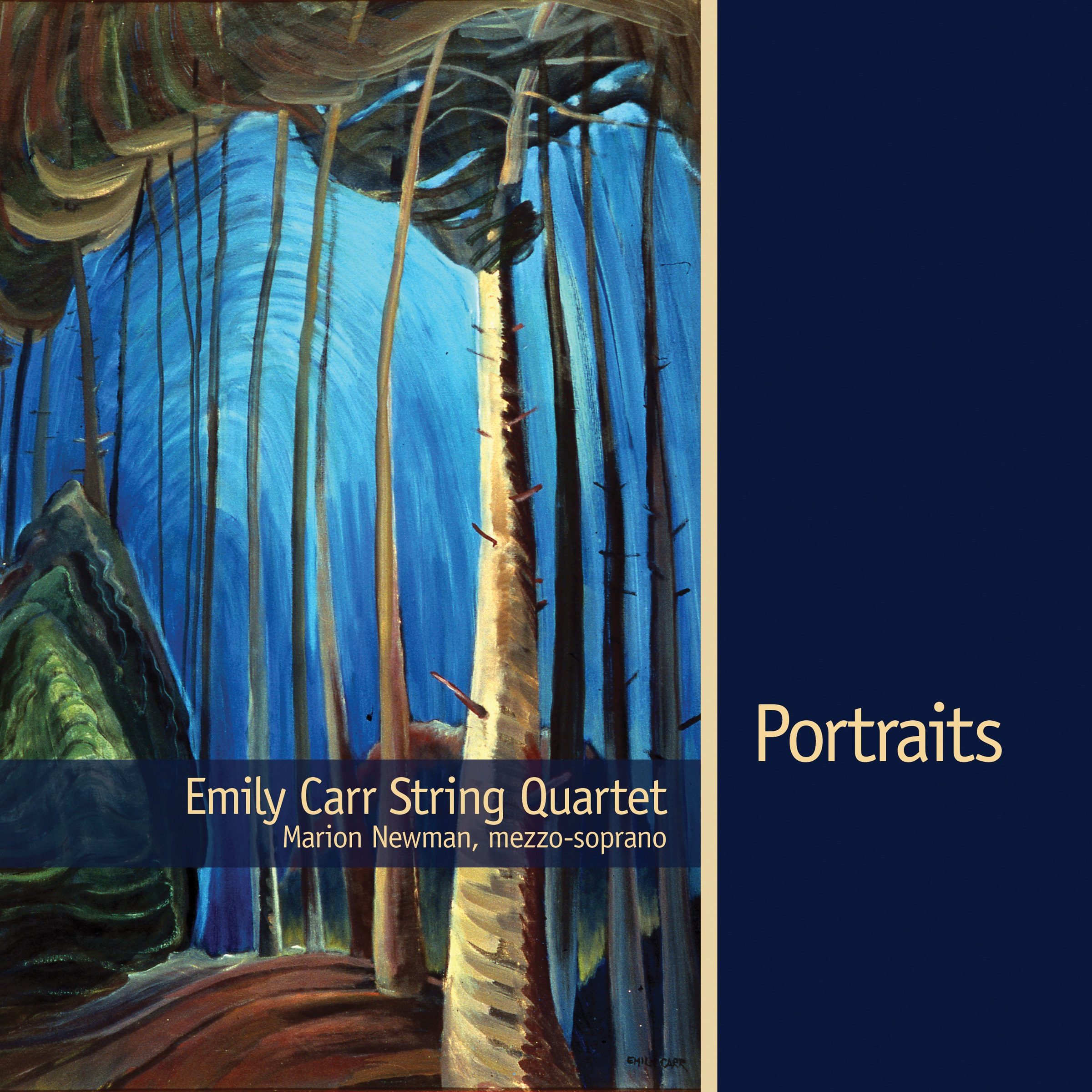 The Emily Carr String Quartet (emilycarrstringquartet.com) released its second album in January. Portraits, a digital release on Leaf Music “is inspired by the work of Emily Carr. […] It is through music, one of the most abstract of art forms, that we can connect ourselves to her. The rhythm of a piece can be likened to the movement of brush strokes. The musical notes can be described as the pigments of colour chosen to convey the deep, dark and wild nuances of B.C.’s coastal rainforest. Musical phrases can begin to suggest Emily’s connection with the land and the First Nations she was friends with.” Four Canadians – Tobin Stokes, Jocelyn Morlock, Jared Miller and Iman Habibi – have written works that reflect their feelings about or inspired by the iconic artist. Stokes’ Feathers is a nine-movement work with each brief sketch, with such titles as Nesting, Nightingale and Hummingbirds, prefaced by a short quotation from the writings of Carr. Morlock’s Big Raven evocatively reflects Carr’s desire to “bring loneliness to this canvas and haunting broodiness, quiet and powerful.” Miller was inspired by another of Carr canvas, Strangled by Growth, which juxtaposes a human construction (totem pole) with the natural world (forest). Habibi’s Beloved of the Sky pays homage to the painting of the same name in the second movement, with impressions of Carr’s depictions of Forest, her pet monkey Woo and an introspective Self Portrait completing the work. The disc concludes with Stoke’s suite Klee Wyck, interpretations of five stories from the book of the same name. Each of the composers bring their own frame of reference and personal language to the project and the ensemble successfully bridges the divides effectively and convincingly, make for a truly enjoyable disc.
Listen to 'Portraits' Now in the Listening Room
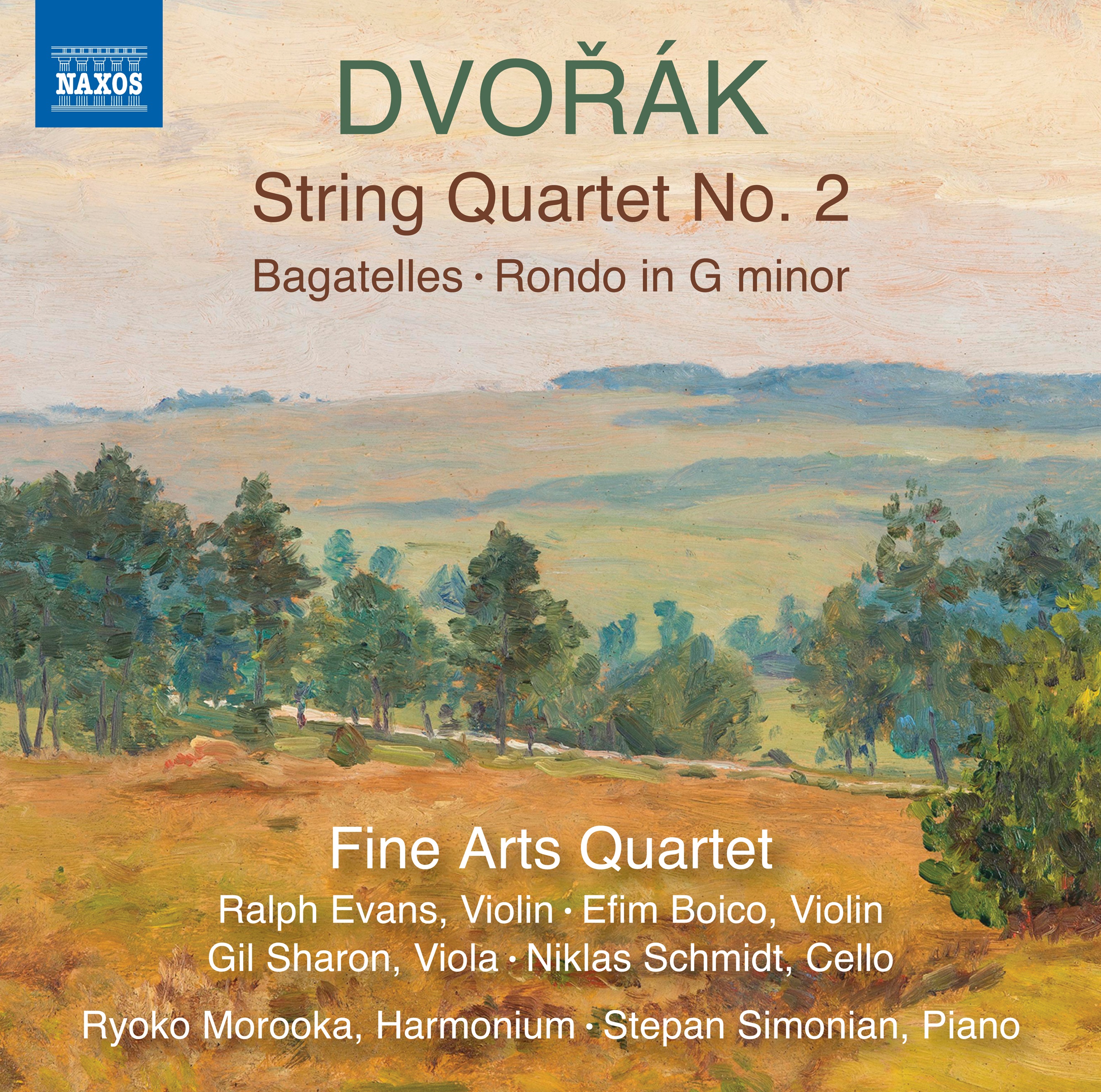 The Fine Arts Quartet was founded in Chicago in 1946 so of course there have been personnel changes over the decades. The current violinists, Ralph Evans and Efim Boico, have been members since 1982 and 1983 respectively, with violist Gil Sharon and cellist Niklas Schmidt joining in 2018. The ensemble is still going strong and has just released the tenth and final volume of the complete string quartets (plus other related works) of Antonin Dvořák, Dvořák – String Quartet No.2; Bagatelles; Rondo (Naxos 8.574513 naxos.com/CatalogueDetail/?id=8.574513). String Quartet No.2 in B-flat Major was one of three quartets written in 1869 during a period when Dvořák was markedly influenced by Wagner. He later destroyed the scores and the quartets were thought to have been lost until sets of parts were discovered after his death. According to the website antonin-dvorak.cz/en, although there had been a private performance in Prague back in 1932, the first public performance of Quartet No.2 was not until September 2021 in that same city by the Zemlinsky Quartet. This recording of the 50-minute work took place just over a year later in Marienmunster, Germany. It is hard to tell why it languished so long without acceptance, or for that matter why it was rejected by the composer. It’s a lovely and fully developed work, if, according to Paul Griffiths, a bit “prolix.” [I had to look that up.] The disc is completed by the humourous Bagatelles of 1878 for two violins, cello and harmonium (Ryoko Morooka) and the rollicking Rondo in G Minor from 1891 for cello and piano (Stepan Simonian). With Dvořák in its rear-view mirror and a discography of some 200 other works spanning the history of the string quartet genre, I look forward to seeing what the future holds for this fine (arts) quartet.
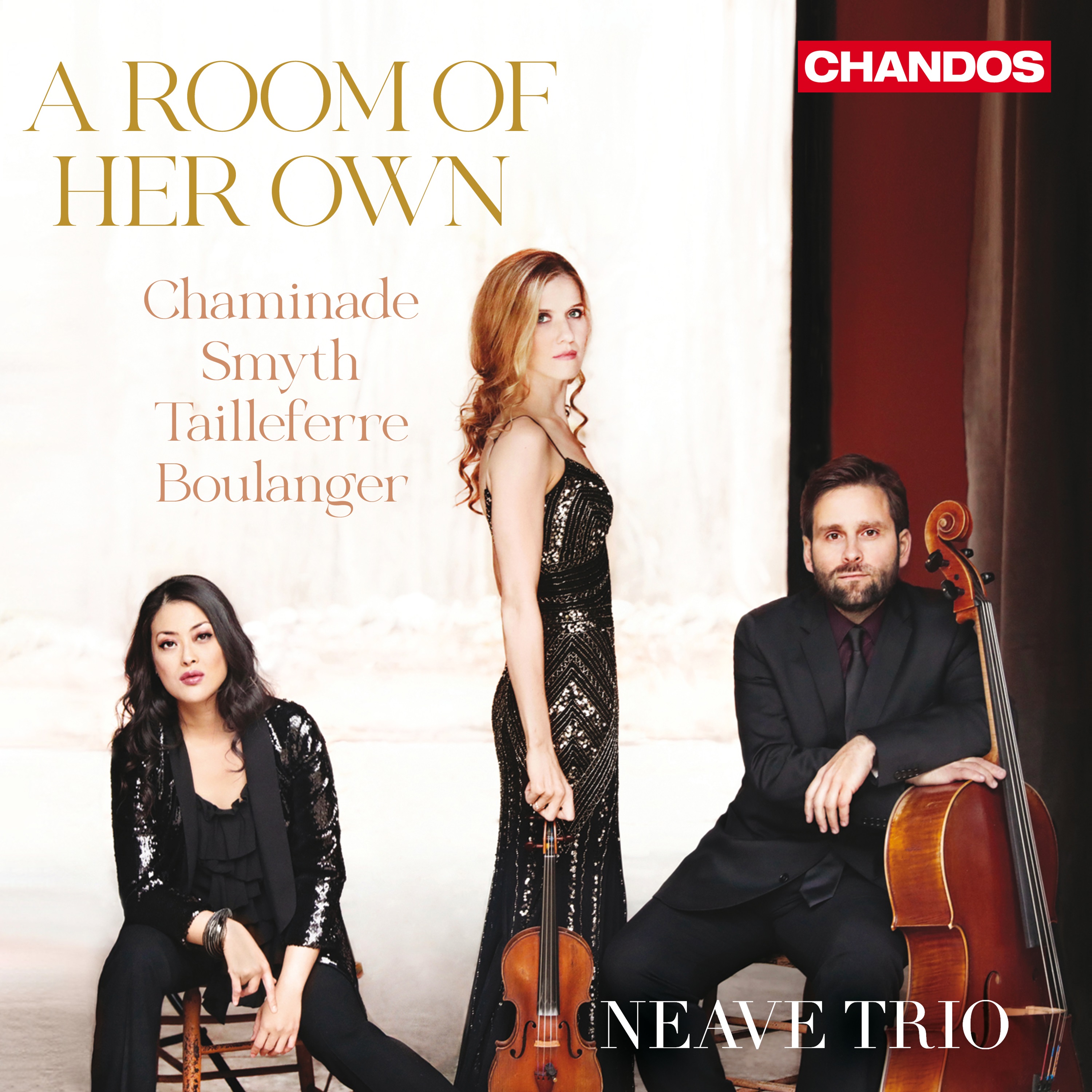 The Neave Trio is back again – five reviews in these pages since 2017 – and their latest, A Room of Her Own (Chandos CHAN 20238 chandos.net), features four turn-of-the-20th century composers Lili Boulanger, Cécille Chaminade, Dame Ethyl Smyth and Germaine Tailleferre. It’s a bit of misnomer to designate Tailleferre as turn-of-the-century however as she lived and remained active as a composer until 1983. As a matter of fact, although her Trio originated in 1917, she reworked the version included here in 1978, replacing the middle movement and adding a fourth. These new, ebullient movements add a sunny quality to the work while still maintaining the characteristic voice she had established some six decades earlier. Boulanger completed her Deux piéces en trio in 1918, the year of her untimely death at the age of 24. The first of these is a cheerful, brief depiction of a spring morning. The second is a sombre, more extended exploration of a sad evening. The other two trios date from almost 40 years earlier, both composed in 1880. Chaminade’s Trio No.1, Op.11 in G Minor is a fetching work in four movements, with a particularly charming Presto leggiero featuring waterfall-like textures in the piano. British composer Smyth is the only non-French national included here and her formative studies took place in Leipzig, grounding her firmly in the Austro-German romantic tradition. She was born one year later than Chaminade, in 1858, and both died in 1944. Her Trio, at 31 minutes the longest offering here, like her coeval’s is also in a minor key, in this case G Minor. In spite of this there are many bright moments, especially in the scherzando section of the second movement and throughout the Scherzo. Presto con brio third. The Neave Trio in, as always, in top form and is to be commended for bringing these rarely heard gems to light is such stellar performances.
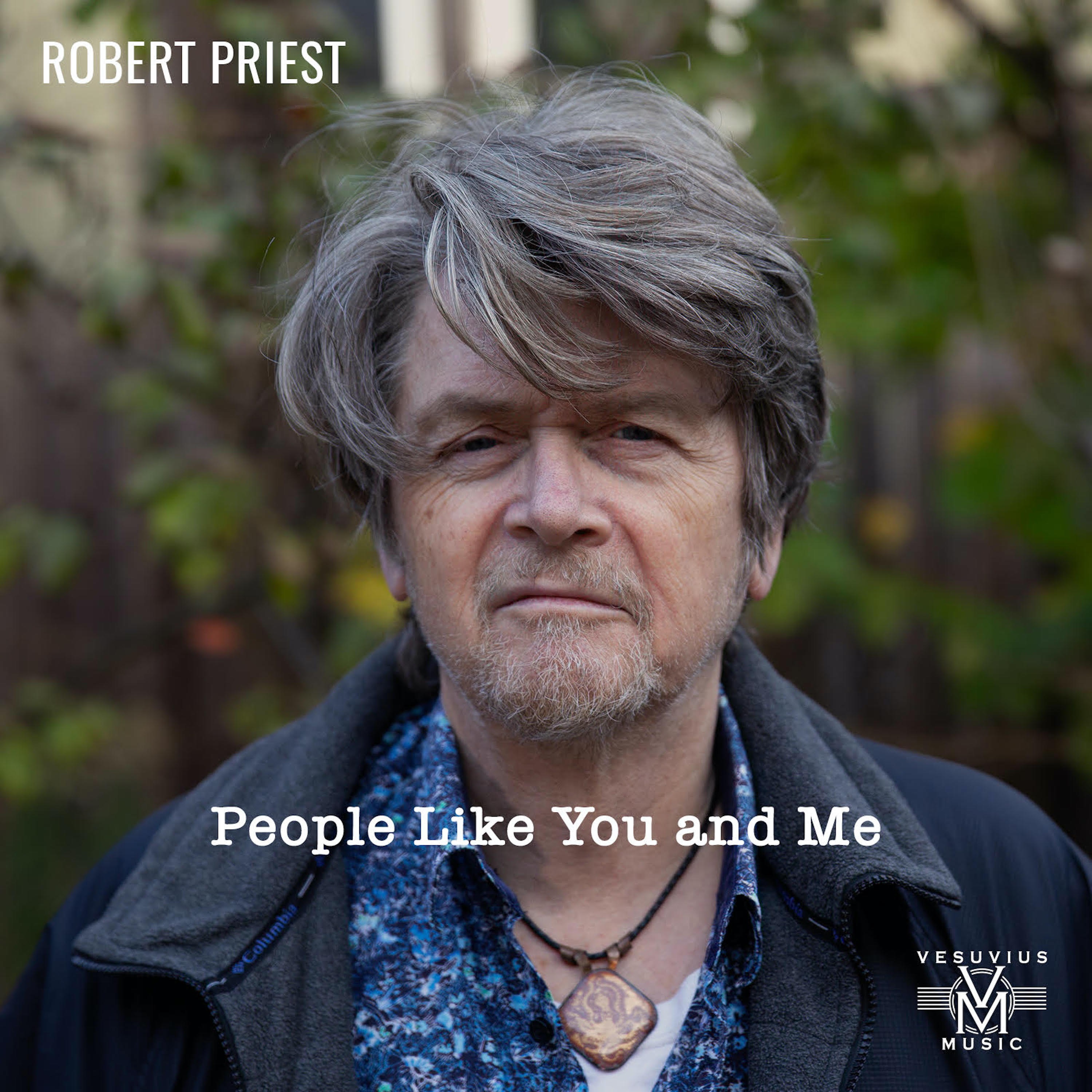 Poet and author Robert Priest has been active on the Toronto scene as long as I can remember, going back to the early 80s when we were both denizens of Ye Olde Brunswick House open mic nights. I’ve often thought of him over the years, fondly remembering a line (with a tip of the hat to Allen Ginsberg) “I saw the best minds of my generation falling off streetcars” or something to that effect. [Priest tells me the phrase may have actually been “the best mimes of my generation.”] He’s obviously been active in the years since, with half a dozen albums, myriad poetry collections and novels to his credit, as well as co-writing Alannah Myles’ hit Song Instead of a Kiss. I was disappointed to miss his recent album launch at Hugh’s Room – I was asleep at the wheel I guess – but am glad to have received a copy of People Like You and Me (vesuviusmusic.com/robert-priest). It’s a combination of spoken word and song, all accompanied by some fine players from Toronto’s jazz community including Kevin Breit, Alison Young, Great Bob Scott and George Koller, who also share writing credits with Priest. The music is diverse, running a gamut of styles. Most surprising to me is the jazzy torch song You and I and Faraway co-written with Allen Booth and featuring Young’s honey-dripping sax, in which Priest turns in a convincing Brian Ferry-esque performance. Some of the clever turns of phrase I particularly enjoyed were “In my country we don’t have free speech, but the speech we do have is really, really cheap” and “I’m so prophetic I get pre-traumatic stress disorder!” from [I strive for] Outer Peace and “Love is a many gendered thing” from a tune of the same name. I wish I hadn’t missed the show!
Listen to 'People Like You and Me' Now in the Listening Room
Concert note: I do intend to be at Priest’s next performance at the Great Sunday Night Folk Off at the Tranzac on April 21 (5pm start).
We invite submissions. CDs, DVDs and comments should be sent to: DISCoveries, The WholeNote c/o Music Alive, The Centre for Social Innovation, 720 Bathurst St. Toronto ON M5S 2R4 or to discoveries@thewholenote.com.